


Blog Content
Ice Cream Culture in Türkiye and Around the World
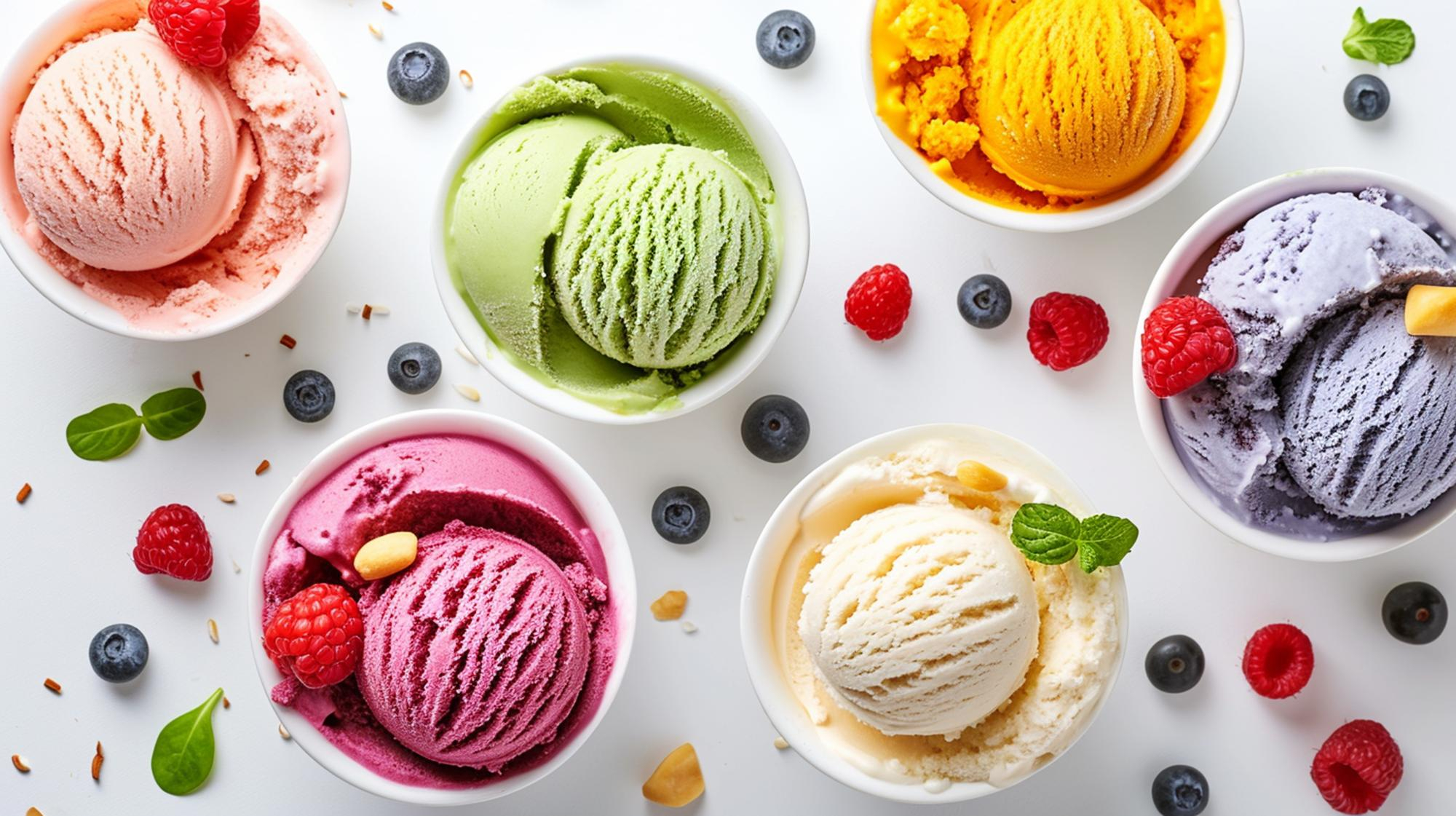
Ice cream is a cold dessert made by mixing and freezing milk or dairy products, sugar, and various sweeteners. Ice cream is produced worldwide using different recipes and techniques, but the basic ingredients and production process are generally similar.
Basic Components of Ice Cream
- Milk and Dairy Products:
- The main ingredient in ice cream is milk. Other dairy products such as cream, milk powder, or condensed milk can also be used.
- Sugar:
- Sugar is used to sweeten ice cream and also affects its texture.
- Sweeteners and Flavorings:
- Ice cream is flavored using a variety of sweeteners and flavorings such as vanilla, chocolate, fruit puree, nuts, coffee, and caramel.
- Stabilizers and Emulsions:
- To improve the consistency and texture of ice cream, stabilizers and emulsifiers such as gelatin, guar gum, agar-agar, and egg yolk are often added.
Ice Cream Making Process
- Preparing the Mixture:
- Milk and dairy products, sugar, and sweeteners are combined to create a homogeneous mixture. This mixture is then pasteurized, usually by heating it at a low temperature.
- Homogenization:
- The mixture is homogenized to achieve a uniform consistency. This breaks down the fat particles into smaller pieces.
- Cooling and Maturation:
- The mixture is then chilled and left to rest for several hours or overnight. This process helps the flavors to meld and the mixture to thicken better.
- Adding Ice Cream and Air:
- The mixture is frozen in ice cream machines while being continuously stirred. During this process, air is added to the mixture, which gives the ice cream a light and creamy texture.
- Hardening:
- The ice cream is then placed in a freezer at low temperatures for its final hardening stage. This stage allows the ice cream to acquire its final texture and form.
Ice Cream Varieties
- Gelato (Italy):
- Gelato has a lower fat content and a denser consistency. It contains less air and is generally served at lower temperatures.
- Sorbet (Sorbetto):
- Sorbet is a type of ice cream made with fruit puree, water, and sugar, without milk or dairy products.
- Frozen Yogurt:
- Yogurt-based ice cream has a lower fat content and retains the slightly sour taste of yogurt.
- Soft Serve:
- Soft serve ice cream is served fresh from the machine and has a softer texture.
- Kulfi (India):
- Kulfi has a dense and creamy texture and is traditionally flavored with saffron, cardamom, and nuts.
The Cultural Significance of Ice Cream
- Social Activities: Ice cream is a part of social events in many cultures. Ice cream parlors are popular gathering places for families and friends.
- Tourism: Certain ice cream flavors, in particular, are very popular in tourist areas. For example, gelato in Italy or Maraş ice cream in Türkiye attract the attention of tourists.
- Seasonal Consumption: Ice cream is traditionally consumed as a refreshing dessert, especially during the summer months, but nowadays it's available year-round.
Ice cream is a beloved dessert worldwide for its delicious taste and refreshing qualities. Enriched with diverse recipes and presentations across different cultures, ice cream is an indispensable part of both traditional and modern cuisines.
Ice Cream Culture
Ice cream is a dessert that holds an important place in Turkish culture and is indispensable, especially during the summer months. Ice cream culture is remarkable for its rich history and diversity. Here are some important points about ice cream culture:
History
- Ottoman Period: Ice cream's origins date back to the Ottoman Empire. It was popular in the Ottoman palace kitchens as a refreshing and sweet treat.
- Maraş Ice Cream: In Türkiye, when you think of ice cream, the first thing that comes to mind is Maraş ice cream. Unique to the Kahramanmaraş province, this ice cream is made using goat's milk and salep (orchid root powder), and its consistency differs from other ice creams.
Materials and Instructions
- Goat Milk: Goat milk is used especially for Maraş ice cream. This milk provides the ice cream with its unique taste and texture.
- Salep: Another important ingredient that improves the consistency of ice cream and gives it an elastic texture is salep powder.
- Natural Sweeteners: Traditional ice creams generally use natural sweeteners. Different flavors are achieved with various ingredients such as fruits, chocolate, and nuts.
Presentation and Consumption
- Tandoor and Countertop Ice Cream: In various regions of Türkiye, ice cream is prepared by beating it in tandoor ovens or on stalls before being offered for sale.
- Ice Cream Shows: Ice cream vendors in Maraş perform various tricks while serving ice cream to customers. These tricks take advantage of the ice cream's flexible texture, providing entertaining moments for the audience.
- Types: Today, there is a wide variety of ice cream options. Besides traditional Maraş ice cream, there are ice creams available in different flavors and shapes.
Cultural Significance
- Social Activities: Ice cream is an indispensable part of social events in Türkiye. Families, friends, and couples choose to enjoy eating ice cream as an activity.
- Tourism: Ice cream is a major attraction for tourists visiting Türkiye. Maraş ice cream, in particular, is one of the flavors that draws tourists' attention.
Ice Cream Today
- Modern Interpretations: Traditional ice cream making has been reinterpreted by combining with modern techniques. With different flavor combinations and presentation styles, ice cream culture is constantly evolving.
- Healthy Alternatives: Nowadays, in line with healthy eating trends, ice cream varieties made with low-sugar, vegan, and natural ingredients are also gaining popularity.
Ice cream culture is an important part of Türkiye's rich and diverse gastronomic heritage. It offers an unforgettable taste experience for both locals and tourists.
Ice cream culture around the world
Ice cream holds a significant place in different cultures and geographies around the world, with its own unique variations. Each country may differ in its ice cream making process, ingredients, and presentation. Here are some examples of ice cream cultures from around the globe:
Italy
- Gelato: Gelato, a famous Italian ice cream, has a denser and creamier texture than other ice creams. Gelato is usually made using cow's milk, sugar, and natural sweeteners. Its lower fat content and fewer air particles contribute to its thicker consistency.
- Sorbetto: In Italy, sorbetto, a dairy-free drink made with fruit and water, is also popular. It is light and refreshing.
United States
- Ice Cream: Ice cream in the US is known for its high fat content and creamy texture. It is usually served in large portions and comes in a variety of flavors.
- Soft Serve: Soft serve ice cream, which has a lighter and softer texture, is served fresh from the machine and is usually presented in cones.
Japan
- Mochi Ice Cream: In Japan, mochi ice cream is known as small scoops of ice cream wrapped in rice cakes (mochi). Available in various flavors, mochi ice creams are unique in both taste and texture.
- Matcha Ice Cream: In Japan, ice cream made with green tea powder (matcha) is also quite popular. It has both a sweet and slightly bitter taste.
India
- Kulfi: Kulfi, a traditional Indian ice cream, is known for its rich and creamy texture. It is prepared with pure milk, sugar, saffron, cardamom, and various nuts. It is usually served frozen in ice cream molds.
Türkiye
- Maraş Ice Cream: Türkiye's famous Maraş ice cream is made using goat's milk and salep (orchid root powder) and stands out from other ice creams with its elastic texture. It is usually prepared by beating the ingredients and presented with demonstrations by ice cream makers.
Mexican
- Nieve: Nieve, a type of sorbet made in Mexico, particularly in the Oaxaca region, is prepared using fruit, sugar, and water. It is usually sweetened with fresh fruit.
- Paletas: Another popular Mexican ice cream is paletas, which are ice cream sticks made with fruit puree and milk. They come in a variety of fruit and flavor combinations.
Thailand
- Rolled Ice Cream: Originating in Thailand and rapidly gaining popularity, rolled ice cream is made by freezing liquid ice cream in a thin layer on a cold surface and then rolling it up. It is often decorated with fruit, chocolate, and other toppings.
France
- Glace: French ice cream, glace, is generally dense and creamy. Made using high-quality milk and cream, glace stands out with its sophisticated flavors and presentation.
Global Interactions and Modern Interpretations
- Fusion Ice Creams: With globalization, ice cream recipes from different cultures have come together to create fusion flavors. For example, different types of ice cream, such as Japanese matcha ice cream and Italian gelato, are combined to create new tastes.
- Healthy Alternatives: With healthy lifestyle trends, vegan, low-sugar, and natural ice creams have gained popularity worldwide.
While ice cream culture is shaped by the traditions and flavors of each country, it continues to be a shared passion for people worldwide.
History of ice cream
The history of ice cream dates back thousands of years and has been enriched by contributions from various cultures. Here are some key points about the history of ice cream:
Ancient Period
- Mesopotamia and Ancient Persia: In Mesopotamia and ancient Persia around 2000 BC, refreshing drinks and desserts were made using snow and ice. These early examples were obtained by mixing snow and ice collected from the mountains with fruit syrups.
- Ancient China: In China, around 3000 BC, desserts made by adding rice and milk to snow and ice were popular. This mixture is considered one of the earliest examples of ice cream.
- Ancient Greece and Rome: In ancient Greece and Rome, snow and ice were mixed with honey, fruit juice, and wine to prepare cold desserts. Alexander the Great (356-323 BC) is known to have consumed iced drinks.
Middle Ages
- The Arab World: During the Middle Ages, Arabs began making cold desserts called "sherbet" using milk, cream, sugar, and fruit juices. These desserts spread to Italy and other Mediterranean countries through Arab traders and travelers.
Renaissance and Early Modern Period
- Italy: The modernization of ice cream began in Italy. In the 16th century, Bernardo Buontalenti, a Florentine chef, created the first modern ice cream for the Medici family using cream, sugar, and eggs. Buontalenti's recipe formed the basis of today's ice cream.
- France: Italian ice cream makers traveled to France in the 17th century and introduced ice cream there. Catherine de' Medici's Italian chefs popularized ice cream at the French court.
18th and 19th Centuries
- United States: Ice cream was brought to America from Europe and gained popularity in the 18th century. Famous American leaders such as George Washington and Thomas Jefferson are known to have had ice cream recipes and machines.
- Ice Cream Machines: In the 19th century, an American woman named Nancy Johnson invented the manual ice cream machine in 1843. This machine simplified the ice cream making process and contributed to its widespread popularity.
- Ice Cream Parlor: In the late 19th century, ice cream parlors became widespread in America and Europe. These establishments became popular places where people socialized and consumed ice cream.
20th Century and the Present Day
- The Industrial Revolution and Mass Production: In the early 20th century, with the industrial revolution, ice cream production also gained an industrial scale. The first commercial ice cream factory was opened in Baltimore, Maryland, in 1851 by Jacob Fussell.
- Ice Cream Varieties: Throughout the 20th century, the variety and flavors of ice cream rapidly increased. Alongside classic flavors like vanilla, chocolate, and strawberry, exotic and innovative flavors were also introduced to the market.
- Ice Cream Cone: At the 1904 St. Louis World's Fair, the ice cream cone was introduced for the first time and attracted great interest. This increased the portability of ice cream and made its consumption more practical.
- Ice Cream Chains: In the mid-20th century, major ice cream chains such as Baskin-Robbins, Dairy Queen, and Ben & Jerry's were established and spread worldwide.
- Healthy Alternatives: Nowadays, vegan, low-calorie, and natural ice cream options are also gaining popularity. These alternatives have been developed in line with healthy lifestyle trends.
The history of ice cream has been enriched and diversified by contributions from different cultures and technological advancements. This dessert remains a popular food that people have chosen throughout history to cool down and enjoy a sweet treat.
Interesting Cultural Ice Cream Recipes
There are many interesting and unique ice cream recipes around the world. Here are some of them:
Mochi Ice Cream (Japan)
Mochi ice cream consists of small scoops of ice cream inside rice cakes (mochi). It's unique in both texture and flavor.
Materials:
- 1 cup of rice flour (mochiko)
- 1/4 cup sugar
- 1 glass of water
- Ice cream (your desired flavor)
- Cornstarch (for rolling out mochi)
Instructions:
- Combine rice flour, sugar, and water in a bowl and mix well.
- Microwave the mixture for 2-3 minutes, stirring occasionally.
- Once you have a sticky dough, transfer it to a surface dusted with cornstarch and roll it out into a thin layer.
- Cut the dough into small squares.
- Place a small scoop of ice cream in each square, then fold the edges over to form a ball.
- Put the ice cream back in the freezer until it hardens again.
Kulfi (India)
Kulfi is a rich and creamy Indian ice cream. It is made with pure milk, sugar, saffron, cardamom, and various nuts.
Materials:
- 1 liter of milk
- 1/2 cup sugar
- 1 teaspoon of cardamom
- A pinch of saffron
- 1/4 cup finely chopped peanuts and almonds
Instructions:
- Bring the milk to a boil in a large saucepan, then simmer over medium heat, stirring constantly, until it's reduced by half.
- Add the sugar and stir until it is completely dissolved.
- Add cardamom and saffron.
- Continue cooking the milk mixture until it thickens.
- Pour the mixture into molds and add the chopped pistachios and almonds.
- Leave the kulfi in the freezer for at least 6 hours.
Rolled Ice Cream (Thailand)
This Thai ice cream is made by freezing liquid ice cream in a thin layer on a cold surface and then rolling it up.
Materials:
- 1 cup of heavy cream
- 1/2 cup milk
- 1/4 cup sugar
- 1 teaspoon vanilla extract
- Optional sweeteners (fruit puree, chocolate, cookie pieces)
Instructions:
- Combine the cream, milk, sugar, and vanilla.
- Pour the mixture into a tray and place it in the freezer.
- Wait until the mixture thickens slightly, then add any desired sweeteners.
- Scrape off a thin layer of the frozen mixture with a spatula and roll it up.
- Place the rolls on a plate and serve immediately.
Spaghetti Eis (Germany)
Spaghetti Eis, an interesting example of German ice cream, is made by squeezing and shaping ice cream to resemble spaghetti.
Materials:
- Vanilla ice cream
- Strawberry puree (for the appearance of marinara sauce)
- Grated white chocolate or coconut (for a parmesan-like appearance)
Instructions:
- Using a potato masher or a special ice cream maker, pipe the vanilla ice cream into spaghetti shapes.
- Place the ice cream on a plate.
- Pour strawberry puree over it.
- Garnish with grated white chocolate or coconut.
Avocado Ice Cream (Mexico)
This ice cream, originating from Mexican cuisine, is made with avocado and has a creamy texture.
Materials:
- 2 ripe avocados
- 1 glass of milk
- 1/2 cup cream
- 1/2 cup sugar
- 1 tablespoon of lemon juice
Instructions:
- Peel the avocados and remove the pits.
- Combine avocado, milk, cream, sugar, and lemon juice in a blender and blend until smooth.
- Freeze the mixture in an ice cream maker or place it in a container in the freezer, stirring occasionally, until it reaches a creamy consistency.
These recipes are a great starting point for exploring ice cream varieties from different cultures. Each offers a unique taste experience with its own specific ingredients and preparation techniques.
